



Did you know I’m an author?
Sure, I’m a writer – I’ve been maintaining this blog for several years, and all that. But I’m also a novelist – a storyteller.
(If you want to learn more about my writing career, my current projects and upcoming events, feel free to visit my website: www.joeloslund.com Also, if you’d like to read my stories, or listen while I narrate them with “top quality voice-acting,” I’d invite you join my Patreon community at: patreon.com/JoelOslund)
Today I want to briefly explore the power of stories.
Freelance journalist Katja Keuchnius outlined five of the great powers of stories. (Here’s a link to the original article: https://katjakeuchenius.nl/wetenschap/the-5-powers-of-story-telling/)
Here’s a brief summary of the five powers:
- Action Activation: Stories light up our brain’s motor cortex, meaning that when we hear about a physical or emotional action taking place, our minds react as if we are doing the action ourselves.
- Sensory Engagement: Descriptive storytelling rouses sensory areas of the brain, letting listeners and readers “smell,” “taste,” or otherwise “feel” the narrative.
- Empathy and Compassion: Narratives build social bonds by making us care deeply about the internal emotional journeys of others.
- Neural Coupling: Skilled storytellers can create a brain-to-brain coupling, synchronizing the neurological activity of the speaker/writer and the listener/reader.
- Innovation Catalyst: Sharing a targeted narrative can help a team break their conventional patterns and stimulate creative problem-solving.
In addition to this list, I would add another power of stories: they feel safe to engage with. The characters in the stories aren’t us, so we can read or listen as the characters face terrible obstacles and dilemmas – obstacles and dilemmas which might be very similar to the ones we face in our own lives – but without us feeling threatened or defensive.

In the Bible, stories sometimes go by another name: parables!
Isn’t it curious how often Jesus taught through parables? Sure, he spoke in different ways to different people in different situations, and many of these were clear and literal. But most of his larger public addresses were riddle with parables. It’s almost as if he knew the power of stories.
Let’s consider a few examples:
- The parable of the treasure in the field: “The kingdom of heaven is like a treasure hidden in the field, which a man found and hid again; and from joy over it he goes and sells all that he has and buys that field.” (Matt. 13:44)
- The parable of the rich fool: “The land of a rich man was very productive. And he began reasoning to himself, saying, ‘What shall I do, since I have no place to store my crops?’ Then he said, ‘This is what I will do: I will tear down my barns and build larger ones, and there I will store all my grain and my goods. And I will say to my soul, “Soul, you have many good things laid up for many years to come; take your ease, eat, drink and be merry.”’ But God said to him, ‘You fool! This very night your soul is required of you; and now who will own what you have prepared?’” (Lu. 12:16-20)
- The parable of the lost coin: “What woman, if she has ten silver coins and loses one coin, does not light a lamp and sweep the house and search carefully until she finds it? When she has found it, she calls together her friends and neighbors, saying, ‘Rejoice with me, for I have found the coin which I had lost!’” (Lu. 15:8-9)
The first parable, as short as it is, illustrates all of the powers listed above. There is action activation as the man finds a treasure, sells everything he has, and then buys the field. There is sensory engagement as we imagine what the field might look and smell like. There’s empathy and compassion as we see the man’s joy on display. The effects all produce a neural coupling effect, hinting at the deeper meaning or moral of the passage. And the parable serves as an innovation catalyst, suggesting a different way to think about the kingdom of heaven. Best of all, the parable is about some random “man,” not us. (Or is it?)
The second parable does the same thing, activating our motor cortex and sensory areas of the brain as we read about barns, crops, grains, and even the smell of fresh lumber that accompanies the building of a new barn. We empathize with the man’s thinking while sensing a deeper meaning, and learning, once more, to think differently than before. Seeing as how the parable has a “sad” ending for the man, we are twice as happy it’s a fictional character and not us.
The third parable, surprise surprise, illustrates all of the powers well. What sights and sounds and smells does this story evoke? What feelings? What empathy? One small thing to note in this parable is that the ten silver coins would have been the woman’s wedding dowry – similar to a modern day wedding ring. The coin itself held some monetary value, but the sentimental value was much higher.
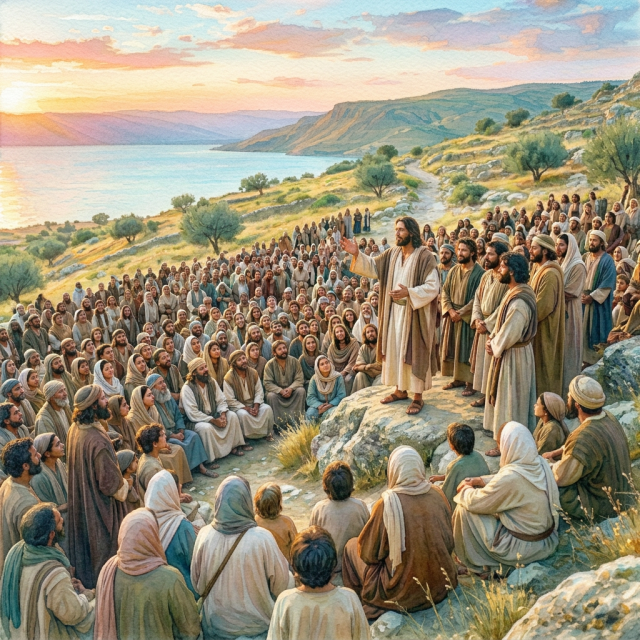
There are many more parables, of course, and many of them are much longer. Feel free to read them and see if you can identify the different “Story Powers” at work.
After that, you might take some time to consider how you mightemploy the power of stories moving forward so as to better communicate your most important messages.


I’ve always loved stories! A good story can take an abstract truth, bring clarity to it, and then make that truth “stick.” And speaking of that, I think I’ll go listen to your next chapter of Kezzog and see what he has up his sleeve today. 😊
LikeLiked by 1 person
Absolutely! Stories are not only powerful, they’re also wonderful. I like what you shared about how a good story can also be “sticky.” I agree completely.
LikeLike