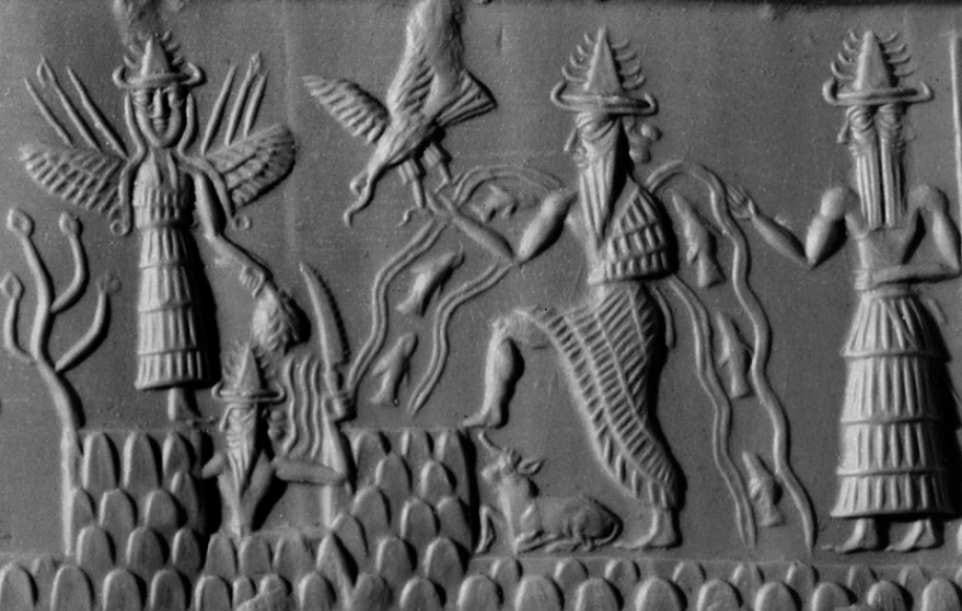
Do you believe in ghosts?
What about angels? Demons? Spirits? Gods?
Last week, we took a moment to remember that the Bible was first written in a time that is not our own, in a place that is not our own, to a people and culture who are not our own. That means that any of us who read the Bible in English, or any other language apart from the original Hebrew, Aramaic, and Greek, are in great danger of misunderstanding the depth of meaning used in the original Biblical texts. This misunderstanding, if left unchecked, can result in a myriad of dreadful misinterpretations of Scripture, and a whole category of poor theology I refer to as Reductionism (reducing complex thoughts and ideas for the sake of simplicity, but at the cost of accuracy and truthfulness).
The reason we study context in all its various forms is that it helps us to peel back the many dreadful layers of misunderstanding which naturally occur whenever we read the Bible through a translation.
Which translation is the best? NASB? KJV? ESV? NIV? NLT? Living Letters? Amplified? Message? Passion? Are you ready for this? They’re all good, but they’re also all bad.
Why? Because they are translations, and not the original text. As you’ll remember from the previous post in this series, modern English (by some estimations) has nearly 100-times as many words as the ancient Hebrew language. And while this rule of thumb is not exact, it can be a helpful illustration to consider that each word of the OT means approximately 100 different things in the modern English language. That makes it quite the impossible task for Bible translators to know for certain how best to translate the various passages of Scripture. Some default to a more literal translation, which has its merits and faults, and others prefer a more figurative translation, which has its merits and faults. Still others prefer to blend the literal and figurative translations, which has its merits and its faults.
So we have to ask ourselves, is this a lost cause – trying to translate the Bible into other languages? Not necessarily. Through a comprehensive study of the various forms of context (literary, geographic, chronological, cultural, textual, relational, functional) we can begin to translate the words with greater confidence. It is worth mentioning, however, that every time we approach the Scriptures, whether for the purposes of translation, or devotional reading, or even study, we must approach the Scriptures with a humble and contrite spirit. The fact of the matter is that we will probably never fully know every nook and cranny of the Scriptures and their complete meanings, so humility is the only reasonable approach. From the freshly born-again Christian to the wisened Bible scholar, we’re all equally wise to approach our infinite God in light of the knowledge that we are finite. That means we will never fully understand His infinity. For my part, I find this to be remarkably encouraging. It lifts the weight of the universe off of my shoulders. Hopefully you feel the same way.

Okay, let’s get back to the opening questions, but we’ll frame them a little differently. Did the ancient Israelites believe in ghosts? What about angels? Demons? Spirits? Gods?
If you answered ‘yes’ to all of the above, I would like to reward you with a gold star. Sadly, there’s no room left in the budget, so I’m afraid you’ll have to provide your own gold star.
“But how can this be?” you might ask. “Didn’t the Israelites believe that there is only one God?”
Well, yes and no.
Yes in the sense you’re probably thinking. The Israelites did believe that Yehovah (Yahweh) was and is the One true God of Creation. A quick look at Deut. 6:5 makes this apparent. But of course, they struggled with fidelity to the One true God, and often ran off to worship idols and pagan gods.
However, “no” in the sense that “god” didn’t mean the same thing to the ancient Israelites as it does to us.
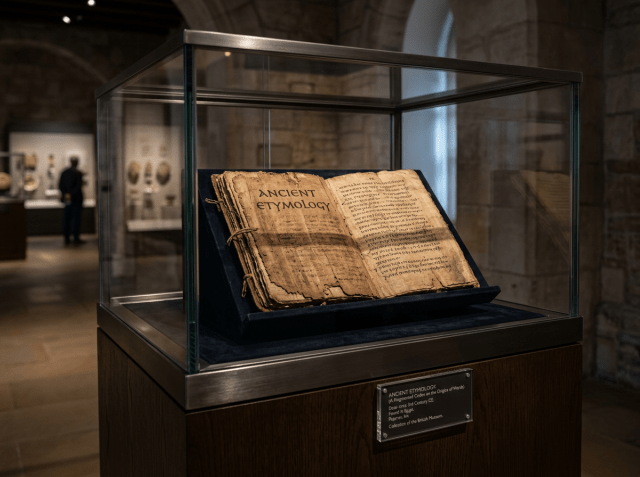
The word most commonly translated as “god” in the OT is the Hebrew word “Elohim,” which is the plural form of “Eloah,” or if you prefer the Arabic variant, “Allah.” It is often used in the short form, “El,” which is a word signifying strength, as in “El-Shaddai” (God-Almighty). The etymology is uncertain, but it is generally agreed that the primary idea is one of strength, or power of effect. The plural form of Elohim doesn’t refer to the trinity of persons within the Godhead, but rather to the fullness of divine strength, or the sum of the powers displayed by God.
However, the word “Elohim” was also used as a term of reverence for a local magistrate. Other times, it was used as a superlative, referring to angels, gods, goddesses, and even great and mighty people.
You may be further interested to learn that there is no Hebrew word for demons or devils in the OT, although there is considerable mention of them in the NT (which was primarily written in Greek). The adversarial forces of darkness in the OT were normally referred to by their occupational titles, such as the destroyer (“Shawkath”), or the adversary (“Satan”). In most of the other occurrences, demons and devils are simply referred to as spirits (“Ruach”), or perhaps “unclean spirits” as in Zech. 13:2 (“Toomaw Ruach”).
You may remember from last week that ruach also means “wind,” “breath,” “exhalation,” or figuratively “life,” “anger,” or “unsubstantiality.” However, it can also refer to a region of the sky, and it can resemble the spirit of a rational being. More generically, it can refer to air, courage, vanity, cool, or even a tempest. And the list goes on from there.
When we consider this list, we can appreciate a few of the possible applications of the word “ruach.” In some cases, this may be referring to a spirit of anger, or a spirit of the air. Other times, it refers to a spirit of courage or vanity.
With so many possible applications for Biblical words like “god” and “spirit,” we’re beginning to appreciate how each of the related concepts (angels, demons, powers, principalities, etc.) holds a myriad of similar possible applications.
Next week, we’ll look at a few more of these applications and apply some of the names the Israelites likely ascribed to these various spirits, gods, and unseen forces in an attempt to better “understand” and relate to the world they lived in.
Make a one-time donation
Make a monthly donation
Make a yearly donation
Choose an amount
Or enter a custom amount
Your contribution is appreciated.
Your contribution is appreciated.
Your contribution is appreciated.

