

Well here we are: part 12 of the polytheism context clue!
I applaud you for toughing it out with me on this journey through one of the many context clues we could examine so as to better understand the world view and beliefs of the ancient Israelites.
Today, we finally wrap up this little series. I hope it’s been both beneficial and interesting to you. Let us begin with a brief summary of our journey before finishing with a few final thoughts and applications.
We started this series with the observation that we sometimes come across odd passages in the Scriptures. In some cases these are amusing passages – stories or images that just don’t make sense, but sometimes the passages can be disturbing or even theologically problematic, such as the “conquest narrative” outlined in Joshua and surrounding works. We then drew an obvious conclusion that as with most conundrums, a challenging passage can benefit from the exploration of its context.
Many folks make a mistake when they think about context, pigeonholing the entire thing into a small box of a single subcategory. There are many types and forms of context (cultural, historical, geographic, literary, textual, functional, relational, and so on), and each one of these can help us to better understand a given text, situation, or conversation. While there are a myriad of context clues we could study so as to better understand the Scriptures, we can’t address every context clue in just a few short blog posts, so we selected the context clue of polytheism to focus on for this series. Our goal was to develop a clear understanding of Biblical and historical polytheism in order to peel back some of the troublesome layers of ancient Israel’s history and literature.
We began with a brief observation about historical polytheism: when people think of polytheism, they often take the literal definition (“many gods”) and then picture something like the Greek pantheon as a model for all polytheistic worldviews. But some of these worldviews ascribe a hierarchy to their pantheon wherein certain gods are considered to be stronger or weaker, and worthy of more or less veneration than others. Other worldviews consider their deities to be roughly equivalent and worthy of equal veneration.

But when we approach the Bible, and specifically the Old Testament, we find at least two forms of what I call Biblical polytheism. The first is the polytheism that kept getting the Israelites into trouble – worshipping other gods, serving idols, forgetting the God of Abraham, Isaac and Jacob. I call this “Biblical polytheism” simply because it appears in the Bible.
It is very plain and obvious that the Israelites were never called or encouraged to worship any god besides God. The same is true for us in the Church. We cannot serve two masters, and we should love the Lord, our God with all our heart, soul, mind, and strength. We are never to divide our worship with anyone or anything apart from God. That much is obvious. So why did the Israelites struggle so much with this obvious, straight-forward command?
We took a brief look at the history and geography of Abraham and his descendants (the Israelites) as they began in Ur, moved to Canaan, moved to Egypt, fled from Egypt into the wilderness, and then moved back to Canaan. They were surrounded on all sides by polytheistic nations and cultures for several millennia before the New Testament came around, and they continued to be surrounded by polytheism even still.
We took a brief look at a few of the more popular/common deities from within a few of the major, influential people groups surrounding Israel throughout their history: the Egyptians, Canaanites, Hivites, Jebusites, Philistines, Moabites, Sepharvites, Amonites, Cuthites, Avvites, Arameans, Hittites, Assyrians, Babylonians, Sumerians, Persians, Greeks and Romans.
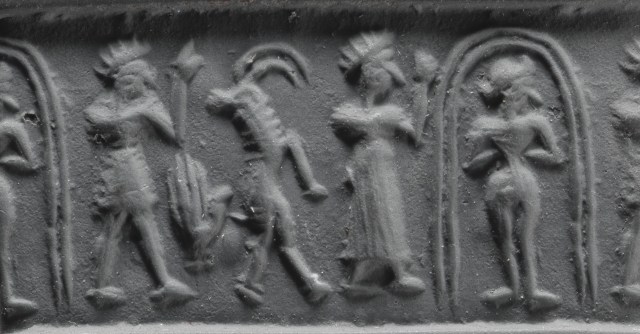
From here, we began to acknowledge a few curious commonalities between the different pantheons, such as the fact that almost every culture had one or more gods dedicated to fertility, harvest, and rainfall. Similarly, almost every culture had one or more gods dedicated to war, violence, chaos, and conquest. The list goes on.
Every one of these cultures and people groups had a prescribed set of rules, rites, and rituals for how to properly worship each god in their pantheon. Care to worship your god of the harvest? Perhaps you should offer some of your harvest as an offering – as a way of saying “thanks!” Care to worship your god of war? Perhaps you should go out and slaughter something or someone, or a whole bunch of someones. Then you can write songs and make declarations about the blood-thirstiness and power of your war god.
From there, we moved on to a powerful observation from the ancient near-eastern scholar, John Walton: “Like everyone else in the ancient world, the Israelites believed that everything that happened and everything that existed found its ultimate cause in deity.”
Good harvest this year? God did it. Drought this year? God did it. We developed a new form of literature, or a new musical instrument? God did it. We slaughtered a bunch of men, women, and children? God did it.
This ancient view is simultaneously puerile and sagacious. It is puerile, or foolish, given the many insights we have learned through our development of the physical sciences. God has ordered creation so as to be self-sustaining, providing rain and sunshine, fertilizer and so on, but it is the responsibility of the farmer to partner in the work of tilling the fields, planting the seeds, cultivating the plants and harvesting the rewards in due time. Without the farmer’s work, there would probably be no harvest. So also, in the case of combat and war, it’s usually the stronger force with the better fighters and the superior equipment who wins.
The ancient view, however, is incredibly sagacious, or wise and insightful, in the sense that it addresses the nearly infinite realms and unseen forces which, by definition, fall outside of the realm of the physical sciences. If I may be so bold, I think too many of us in the modern age have made an idol out of the physical sciences, and that which is “provable,” or “data-driven.” But that’s a point for another time.

From there, we began to draw some connections, realizing that Israel had been heavily influenced by the cultures and customs of the world around them. These cultures and customs undoubtedly penetrated into the Israelites’ own customs and practices. But to what extent?
We paused at this point to address a common objection (or obsession, as the case may be), which I generally refer to as Reductionism – reducing complex thoughts and ideas for the sake of simplicity, but at the cost of accuracy and truthfulness. The objection often goes something like this: “If a given culture or text presented an idea first, that means every other culture and people group who ever came up with a similar idea must have borrowed it from this original source, right?”
We took a brief, introductory look into the opening pages of Walton’s book, Ancient Near Eastern Thought and the Old Testament: Introducing the Conceptual World of the Hebrew Bible. We looked at a simple list of “filters” we should apply any time we’re engaging in the act of comparative studies (of ancient cultures). The simple truth of it is that some of the Bible, or at least a good deal of the Israelites’ habitual patterns, were probably absorbed or “borrowed” from the cultures, people groups, and texts around them. However, on the flip side of this simple truth, we also acknowledged that the subject matter borrowed in this way was probably not so great a quantity as some people would have us believe. (If you’re curious about this point, I encourage you to go back to part 6, or pick up a copy of Walton’s book and read it through).
Acknowledging that this could be a challenging observation for some people to accept, we offered a working “rule of thumb” by which to discern the authentic words of God from the borrowed ideas of the surrounding pagan nations: if an OT passage looks and sounds like Jesus (as revealed in the NT), there’s a good chance it’s an accurate picture of God, or an accurate transcription of something he instructed the Israelites to do. If an OT passage looks and sounds like the polytheistic beliefs and practices of the pagan nations surrounding Israel, there’s a good chance it’s not God, or not an accurate transcription of something God told the Israelites to do.

Having dealt with this objection, we returned to the final exploration of the first form of Biblical polytheism, and looked at a few case studies which showed the absolute centrality of deity in these ancient cultures. Many people were named so as to ascribe honor to a particular god or gods. We also looked at 15 different instances where the Israelites worshipped Canaanite gods (as listed in 2 Kings).
Adding this list of gods to the many gods listed in parts 3 and 4, we acknowledged the “elephant in the room.” It can be a dizzying and daunting task to consider all of these factors!
But I’m convinced it’s worth the effort.
When we take the time to consider and appreciate the “commonplace” world of the ancient Israelites, we can begin to make more sense of the “troublesome” passages we find in the OT. For example, did God ever really command the Israelites to murder and genocide the Canaanites? Probably not. The Israelites were simply following the forms and traditions of the cultures and pantheons surrounding them – attributing their violence as a command from God if they won, and attributing their losses to the anger and wrath, or punishment of God. Again, these are very common beliefs and assumptions within the polytheistic religions of the people historically surrounding Israel. When we add this to the myriad of OT passages explicitly forbidding violence and genocide (and hence, revealing the heart of God to be consistent with the heart of Jesus as seen in the NT), it seems obvious.
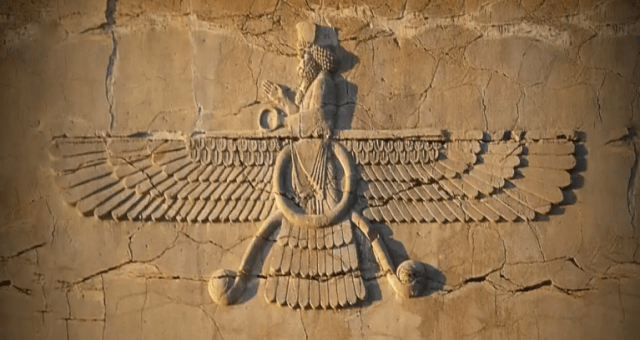
Having resolved these issues, we finally dove into the second form of Biblical polytheism. It is this second form which evaluates and informs our understanding of the unseen realms. It focuses on the role(s) of angels, demons, powers, principalities, rulers of darkness, spiritual forces of wickedness in the heavenly places (Eph. 6:12), and so on.
We took a moment to acknowledge that we are living in the 21st century, and most of us are not Palestinian Israelites. Ergo, we mustn’t make the silly mistake of thinking our modern English translations of the Bible are telling us the whole story (you might be surprised how many people believe this exact thing!). The Bible wasn’t originally written in 21st century English, but rather in ancient Hebrew, Aramaic, and Greek. Why does that matter? It matters because our languages use different words to describe different things, and in the case of ancient Hebrew (and to a lesser extent, ancient Greek), they had far fewer words to work with than we do now. It’s not an exact metric, but as a general rule of thumb, ancient Hebrew had about one word to every hundred words of ours in the modern English.
That means that while we might have a dozen, or even a hundred similar words to a describe a thing, oftentimes there would be one or maybe two words in Hebrew, which could mean all of those different things.
When it comes to certain words like “spirit,” “ghost,” “god,” or “angel,” we have to understand that these words meant many different things in Hebrew. For instance, the OT word for “spirit” is most often “ruach.” But ruach also means “wind,” “breath,” “exhalation,” or figuratively “life,” “anger,” or “unsubstantiality.” However, it can also refer to a region of the sky, and it can resemble the spirit of a rational being. More generically, it can refer to air, courage, vanity, cool, or even a tempest. From there, we can move into some of the variants and implied meanings, but I’ll spare us that exercise for now. Each one of our sample words listed above (spirit, ghost, god, angel) are similarly complex and expansive.
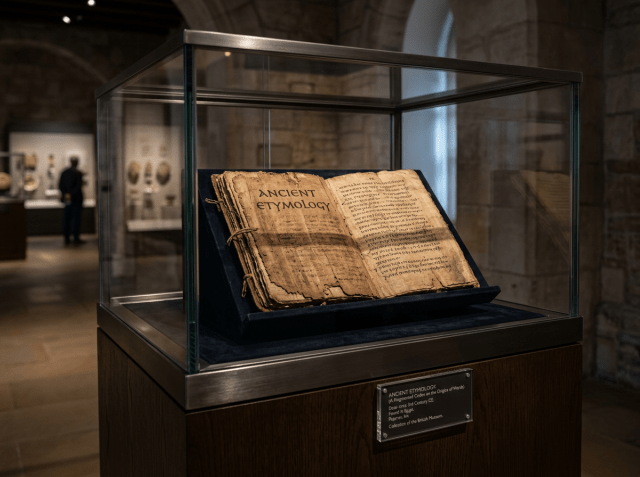
We then made a reference to Bullinger’s brilliant work, Figures of Speech Used in the Bible, and made the simple (but frustrating) observation that a great portion of the Biblical text is not literal, but in fact figurative.
This observation wasn’t raised so as to overwhelm us, nor to discourage any of us from reading and studying the Word of God. On the contrary, the hope was that this simple understanding would help to foster a greater appreciation for the original text and language of the Bible – to inspire within us a greater depth of understanding, and a greater desire to rebel against over-simplification and reductionistic theology.
We then began applying these principles to various word studies, looking at the words used in Hebrew and Greek for the many English words we use to talk about God, the gods, angels, demons, spirits, ghosts, powers, principalities, unseen forces, and the like. In simple terms, the ancient Israelites (as well as us) were polytheistic in this second sense, which is to say that they (and us) believed in the existence of supernatural forces. Because of their original languages, the words we think of as polytheistic (namely “gods” or “demigods”) didn’t necessarily mean the same thing to the Biblical authors, or to the Israelites in general. So also, many of us refer to entities like “demons” or “devils,” but neither of these words show up in the OT Hebrew. It turns out that these entities we refer to as “demons” or “devils” would most accurately translate into the Hebrew word(s) for “god(s)” or “spirit(s)” or something else.
In short, while the first form of Biblical polytheism refers to the times when the ancient Israelites worshipped false gods, the second form of Biblical polytheism simply acknowledges the existence of supernatural, non-material beings. (Feel free to conduct your own language survey if you would like to know more about the linguistic differences between modern English and the original languages of the Biblical texts)
We finally spent a couple of weeks observing some examples of the words and names the Israelites used to refer to some of these unseen forces. We also looked at a few case studies revealing curious observations about the nature of the unseen realms.

Several years ago, I posted a blog entitled “Practical Polytheists,” where I gave a few examples of the ways in which we often worship false gods in practice, even if not in name. This is referring to the first form of Biblical polytheism – the form we ought to avoid. Here’s an excerpt:
Many, if not most, people today are what I would describe as practical polytheists. Oh sure, we’ve gotten away from giving proper names to our modern idols, but they’re effectively the same gods the Israelites flirted with throughout the Old Testament.
Adrammelech was the Sepharvite god of war and love (see 2 Kings 17:31). Nebo, after whom was named a mountain and several towns (see 1 Chronicles 5:8), was the god of wisdom, literature and the arts. Ashtoreth, also referred to as Astarte or Ishtar, was the Sidonian goddess of sex and fertility (see 2 Kings 23:13). And of course Jesus addressed the worship of Mammon in the gospels. Mammon seems to be an Aramaic rendering of the Roman god, Pluto, or the Greek god Plutus, and represents greed and dishonest gain.
So maybe you don’t worship Adrammelech, but do you crave violence, war or the power to control? Do you worship key relationships in your life, making them the chief focus of your attention?
Maybe you don’t worship Nebo, but do you worship knowledge, progress or artistic expression?
And maybe you don’t worship Mammon, but do you crave what others have? Do you worship the idea of financial abundance, thinking that if you can just “get enough” and “have enough” that life will be all good?
As is often the case, when we “peel back a layer” of Scripture or history, we realize that we’re not so very different from those old superstitious simpletons after all. And so it is that the guidance and wisdom God gave to them also applies to us, to neglect our idols in favor of God, who is all-in-all, and who is life abundant. Our fulfillment is not found in obtaining this or that, nor in achieving this or that, but rather in discovering the One who made us, and walking each day, each moment beside Him.

And so here we find ourselves at the end of this little survey on the Polytheism Context Clue. What words do I offer as we close this series? Two things.
First, mere belief in the existence of God does you no good, just as the mere belief in the existence of other unseen gods/forces/angels/demons/powers/principalities does you no bad. Consider the reminder of James 2:19. “You believe in God? Great! So do the demons, and they at least have the decency to shudder.” (paraphrased) There is, however, a significant difference between believing in God, and worshipping Him wholeheartedly. In the same way, there’s a difference between believing in the powers/principalities/etc and worshipping them. The second form of Biblical polytheism acknowledges existence, but the first form bows down and worships. And that can look like any idol you can think of: comfort, ease, knowledge, status, friends, relationships, accomplishments, doubts, fears, etc.
That brings me to my second, and final, thought, which is an ancient, and beautiful charge from Joshua at the end of his life to the Israelites. The words are exceptionally timely and relevant to each one of us today: “Choose this day whom you will serve.” (Josh. 24:15b) Today is “this day,” and tomorrow, when it arrives, will be “this day.” It is a constant, eternal reminder for us to choose each day, each moment, whom we will serve. I would encourage each of us to adopt Joshua’s pledge: “As for me and my house, we will serve the Lord.” (Josh. 24:15e)
Make a one-time donation
Make a monthly donation
Make a yearly donation
Choose an amount
Or enter a custom amount
Your contribution is appreciated.
Your contribution is appreciated.
Your contribution is appreciated.

