Yes, that right. This is part 5 of the polytheism context clue. If you’re joining us for the first time, you may be terribly confused. I suggest going back to read parts 1, 2, 3 & 4 first. It will make a lot more sense of today’s discussion.
In the previous posts, we’ve compiled a few short lists of the culturally significant pantheons of the nations, tribes, ethnic groups and kingdoms surrounding the Israelites, both during their centuries in Egypt and Canaan, but also during their centuries of captivity under the Assyrians, Babylonians, Persians, Greeks, and Romans. Using these lists, we can begin explore some of the commonalities between these different religions and appreciate the theological landscape of the ancient Israelites a little better.
Sadly, I’ll only be able to make a single observation before having to go on an adjacent tangent. You’ll see what I mean in a moment.
First observation: each pantheon consists of gods who are believed to rule over specific things, and one of the proper ways to worship each of these gods was to acknowledge their blessing (when things went well) or the withholding of their blessing (when things went poorly). Worshippers would pray to the gods for blessings, believing their own successes and failures to then be the result of the petitioners’ quality and ability to please the god in question.
For example, say I’m a farmer and my livelihood depends on a good harvest this year. I might pray to Isis or Bastet if I’m Egyptian; Asherah, Baal, Astarte, or Dagon if I’m Canaanite; Tartak if I’m Avvite; Tarhun, Telepinu, or Shaushka if I’m Hittite; Ishtar, Adad, or Ninurta if I’m Assyrian; Ishtar or Adad if I’m Babylonian; Anahita or Tishtrya if I’m Persian; or Demeter or Ceres if I’m Greek or Roman.
If it’s a bumper-crop at this year’s harvest, I thank the appropriate god (see above) and show my thanks by offering back to them a certain percentage of my harvest. If I harvested grain, I would offer some grain. If I harvested oil, I would offer some oil. And so on.
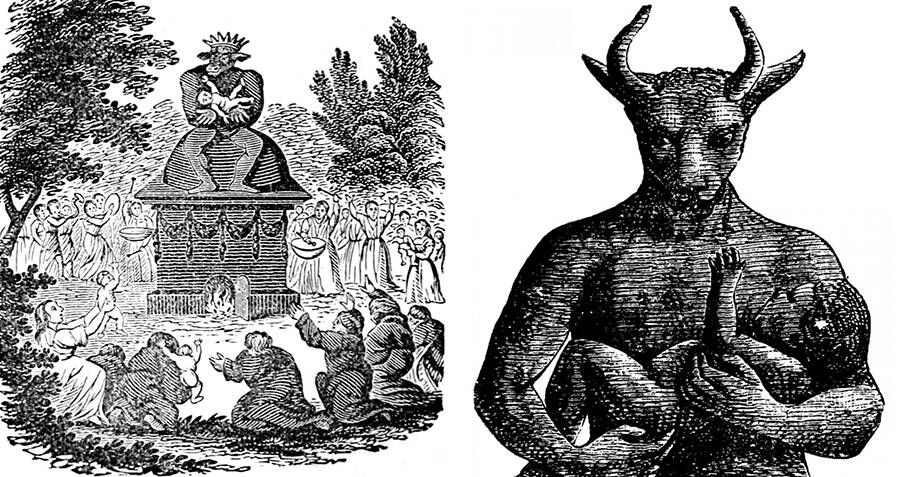
Now let’s consider a different scenario. Let’s say I’m a king (or equivalent leader of my people), and I’m going into battle with another army (or family/whatever). I might want to petition for the favor of my war god, be it Anat, Adrammelech, Arinna, Shaushka, Jarri, Ishtar, Ninurta, Nergal, Verethragna, Athena, Minerva, Ares, or Mars.
As in our example above, I would show appropriate thanksgiving to my god (if our battle was victorious). Our people would write stories and sing songs about our war god, making sure to emphasize how much greater and more powerful they are than the war gods of our opponents. The war gods love blood and gore and conquest – a battlefield filled with the corpses of our enemies makes them happy. They drink the blood of our enemies and eat their flesh. (It’s a bit gruesome for us in our twenty-first century context, but for them, this was normal). We would know that our gods had blessed, and even commanded this bloodshed because they blessed us with the victory.
But if we lost (and any of us survived), it’s nothing but woes and lamentations. Surely our gods didn’t want us to go into battle. Perhaps we did something wrong and they withheld their blessing when we needed it most.
Here comes the kicker. To quote John Walton, “Like everyone else in the ancient world, the Israelites believed that everything that happened and everything that existed found its ultimate cause in deity.”
Good harvest this year? God did it. Drought this year? God did it. We developed a new form of literature, or a new musical instrument? God did it. We slaughtered a bunch of men, women, and children? God did it.
This is jarring to us because it’s not the way we think or live (for the most part) in the modern day. The reality of these things is that God has ordered creation so as to self-sustain, providing rain and sunshine, fertilizer and so on, but it is the farmer who partners in the work of tilling the fields, planting the seeds, cultivating the plants and harvesting the rewards in due time. And in the case of “glorious” victory in combat, it might just be the case that the stronger force with the better fighters and superior equipment often wins. (I know, it’s mind-blowing, right?)
Are there ever exceptions? Undoubtedly. But no system of belief should be based on the occasional exception. The exception is not the rule, and the rule is not the exception.
What am I suggesting? I’m suggesting that Israel, like every other nation and tribe around them, thought the supernatural forces (God, the gods, spirits, angels/demons) were causing, controlling, and determining every detail of every person’s life (and indeed, all of creation).
That’s one of the reasons they struggled so much in their attempts to understand God. They followed the “usual” customs of sacrifices and offerings (Raising livestock? Sacrifice some of those suckers. Growing wheat? Offer some of that to God.), but God doesn’t delight in the blood of animals (Is. 1:11; Hos. 6:6) or other physical offerings. He’s NOT like these other “gods.”
The other gods demand bloodshed and strange ritual worship and burnt offerings, and a hundred other things. But God is not like them. The other gods are derived from human imagination and take on the pettiness and vanity of mankind. But God is not like them. The other gods are pantheons, who really aren’t that jealous of each other, and don’t mind you worshipping other gods at the same time. But God is not like them.
Israel had been heavily influenced by the cultures and customs of the world around them, and it undoubtedly penetrated into their own customs and practices. But to what extent?
This is where we must pause in order to explore an incredibly relevant question: how much was Israel influenced by the world around them, and what impact does that have on us today?
We’ll explore this question in the next post!
Make a one-time donation
Make a monthly donation
Make a yearly donation
Choose an amount
Or enter a custom amount
Your contribution is appreciated.
Your contribution is appreciated.
Your contribution is appreciated.

