Context Clues – Polytheism Pt 2

Welcome to part 2 of the polytheism context clue. In the previous post, I made the claim that developing a clear understanding of Biblical and historical polytheism will help us to peel back some of the troublesome layers of ancient Israel’s history and literature.

So what do I mean by that?

Well, depending on your perspective, the Old Testament (OT) presents one or more problematic images of God, and of His chosen people, Israel.

Everyone who reads the OT in its entirety will agree on one point: the Israelites did not have a great track record when it came to honoring God, honoring creation, and fulfilling their part of the covenant (Abrahamic OR Mosaic).

Beyond that, opinions vary. However, there are a large number of people who read the Bible who would agree that there are several more problematic images of God portrayed in the OT. Some of these are passages where the Israelites (or their leaders) attribute their gruesome violence to the glory of God. Other passages make it seem as though God Himself is condoning, or even commanding savage violence. Other passages yet seem to portray God as commanding or reveling in animal sacrifice, or otherwise relishing in the unraveling of His good creation. 

So what’s up with that?

The truth is that this is a deceptive question. It’s quick and easy to ask, so we instinctively think it should be quick and easy to answer.

It’s not.

But how do you eat a blue whale? One bite at a time.

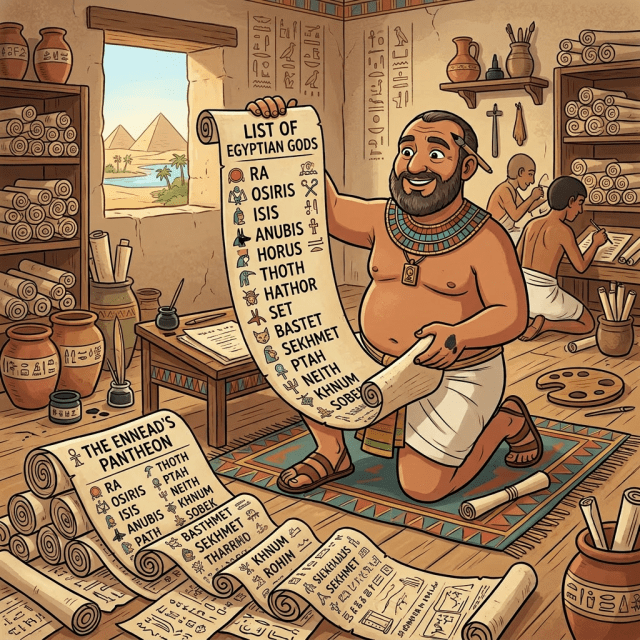
One of the bites that can help us better understand the Scriptures and the ancient Israelites is the context clue of ancient polytheism.

Now when I use the word “polytheism,” you might immediately think of Percy Jackson and the Lightning Thief, or some other modern adaptation of ancient mythology.

Is that an accurate interpretation? Well, it depends.

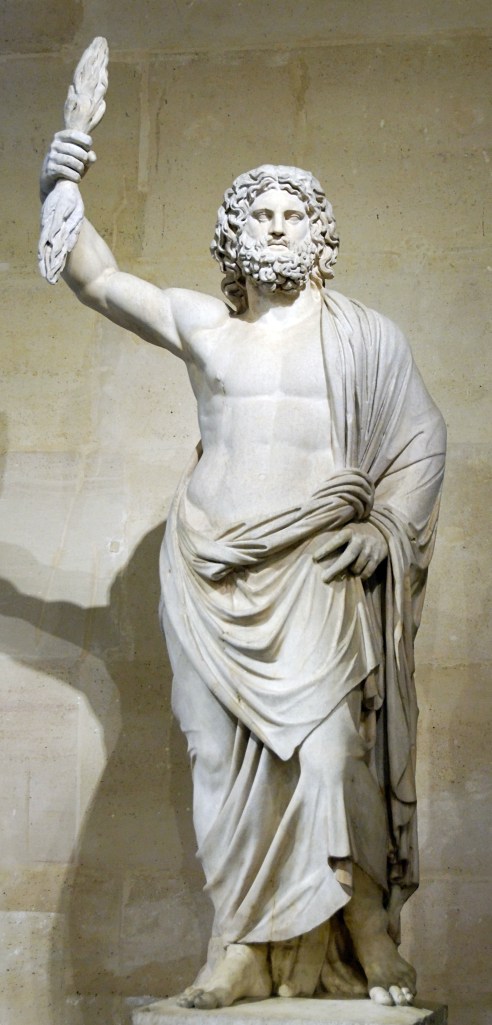
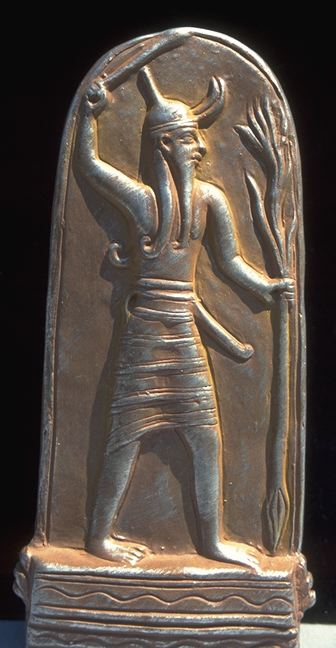
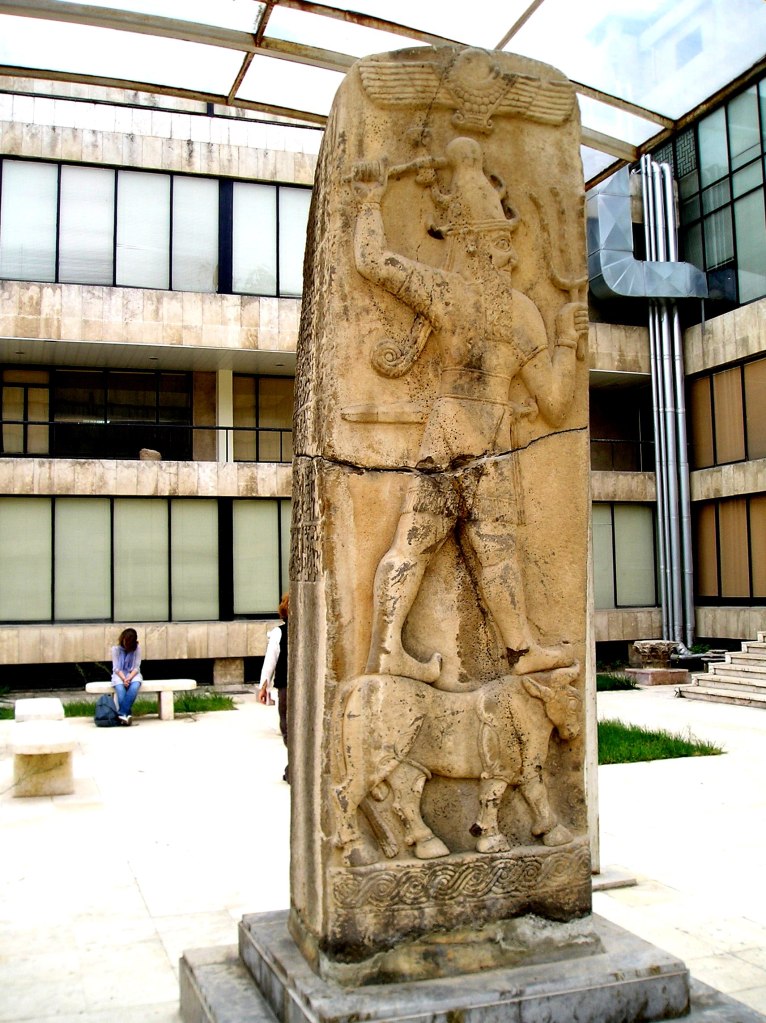
Usually, when people think of polytheism, they take the literal definition (“many gods”) and picture the Greek (or maybe Roman) pantheon as a model for all polytheistic worldviews. Some of these may determine a hierarchy to their pantheon where certain gods are stronger or weaker, worthy of more or less veneration. Others view these as roughly equivalent deities worthy of equal veneration. 

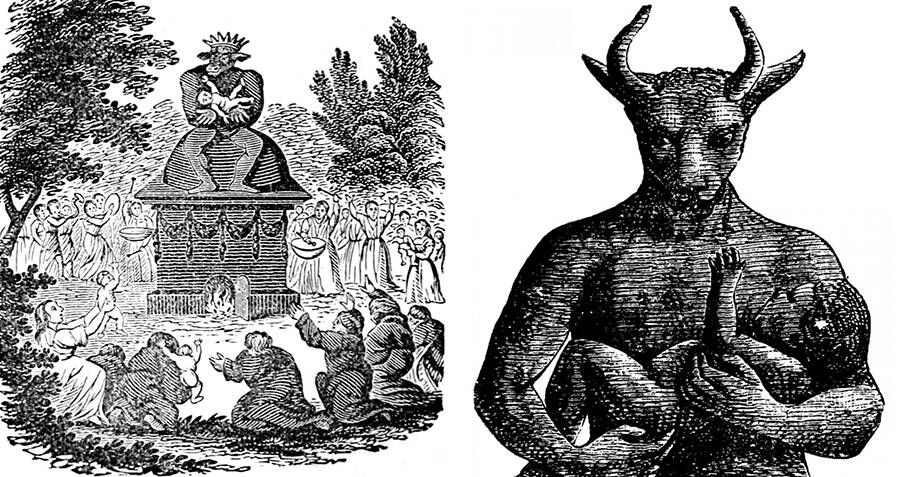
In my opinion, there are two forms of Biblical polytheism. The first is the polytheism that kept getting the Israelites into trouble – worshipping other gods, serving idols, forgetting the God of Abraham, Isaac and Jacob. I call this “Biblical polytheism” simply because it appears in the Bible.

There is a second form of Biblical polytheism from which we can learn much about human nature and psychology, both past and present, but we’ll discuss this second form in an upcoming post.

First, let’s take some time to better understand the major religious and cultural influences that weighed on the ancient Israelites and influenced their way of thinking.

Abraham was called out of the land of Ur. He then uprooted his life and moved to Canaan. A few generations passed by before Joseph was sold into slavery in Egypt. Because of God’s favor, Joseph was later raised to the second-highest rank in all of Egypt, second only to the Pharaoh. Through a series of events, Joseph’s entire family (the descendants of Abraham) moved to Egypt.

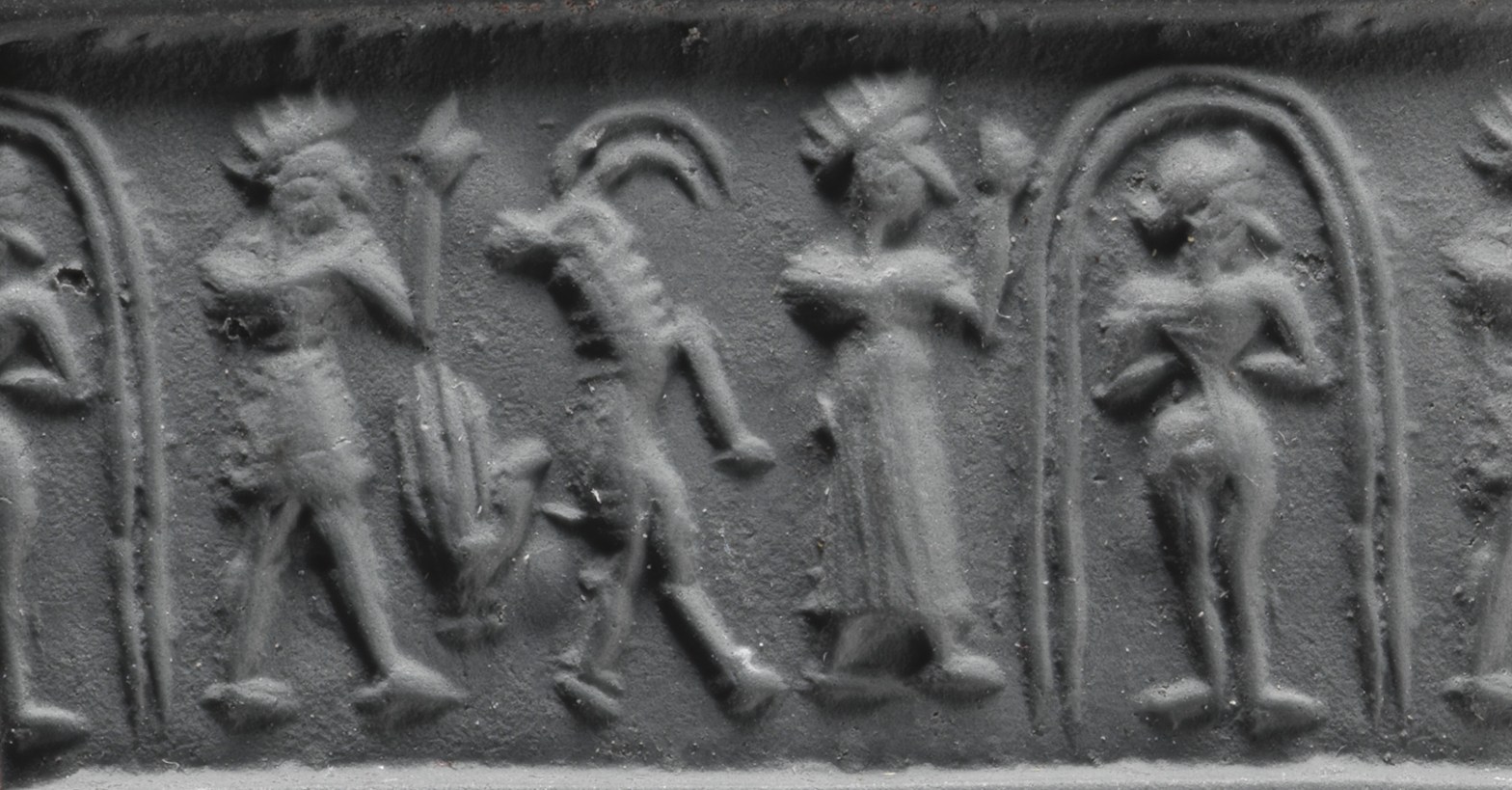
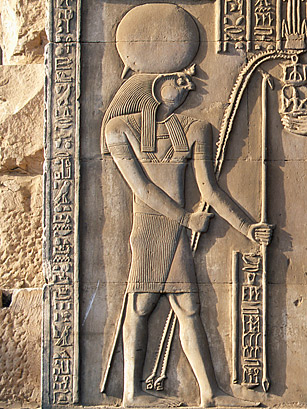
Time passed (four centuries, or so) and things had gotten bad for the Israelites. God raised up Moses and Aaron, and delivered the Israelites out of Egypt. Eventually, they entered the land of Canaan (again), but were surrounded and saturated by Amorites, Hittites, Perizzites, Canaanites, Jebusites, Hivites, Midianites, Amalekites, and Philistines. In addition to this, the Israelites were eventually conquered by the Assyrians, Babylonians, Medes, Persians, Greeks, and Romans.

This is only a partial list, but it already proves my point, which is that the Israelites were completely surrounded by, steeped in, and comfortable with polytheistic religions, despite the fact that God very clearly informed them: “the Lord, your God, is one God,” and “you shall serve no other gods before me.” (Deut. 6:4 & Ex. 20:3)

Given Israel’s terrible track-record on these points, we know that they were heavily (and often) influenced by the worldviews and pagan religions surrounding them. 

I hope you’ll join us again next week as we begin to evaluate some of these ancient pantheons and explore some of the ways these may have influenced the Israelites’ beliefs and behaviors. We’ll then move on to examine a different type of Biblical polytheism and how it can be used to elevate our understanding of both ancient and modern psychology.

Context Clues – Polytheism Pt 1

Old Library

Sometimes I find myself reading a passage of Scripture and wondering, “What was that about?” If I’m not careful, I can be tempted to scratch my head and walk away with a resigned shrug.

Maybe you can relate?

This certainly happens when I’m reading in the New Testament, but if I’m being honest, it happens a lot more often when I read in the Old Testament. 

Sometimes these are amusing passages – stories or images that just don’t make sense, but sometimes the passages can be disturbing or even theologically problematic. I’m reminded of the “conquest narrative” outlined in Joshua and surrounding works. These are the passages that recount Israel’s conquest of the Promised Land. Many of the details are gory and vengeful, even dehumanizing at times. 

As a historical narrative, this isn’t particularly troublesome, even if it is a bit… gratuitous. People often do terrible things to people (murders, theft, affairs, genocide, slavery, and so on), so while the historical narrative is sometimes disheartening, it’s really just a description of things that have happened. “Such and such group of people went in and slaughtered such and such group of people, and when they were finished, they gave credit for the bloodshed to their god or gods.”

So far so good.

But then we reach some of these passages where the God of Israel seems to be the One condoning, or even commanding these heinous acts.

What the heck?

For those of us who’ve read the Bible, this jumps out to us like a jarring, distorted portrait of God – the Creator. This is jarring because it looks nothing at all like Jesus, who is “the radiance of [God’s] glory and the exact representation of His nature.” (Heb. 1:3)

So if it doesn’t look like Jesus (i.e. God), then is it really God? Or is there something else going on here?

A lot has been written on the subject, and I’m not looking to resolve the myriad of complex layers and nuance in a single blog post. If this topic bothers you, consider reading Greg Boyd’s The Crucifixion of the Warrior God, or something similar. In my opinion, Boyd does an excellent job of thoroughly identifying and examining the violent depictions of God in the Old Testament. He then outlines what he calls the “Cruciform Hermeneutic,” which encourages readers to interpret all of Scripture through the lens of Jesus, and specifically through His act of self-sacrificial and saving love through the events of the Passion (the arrest, trials, crucifixion and resurrection). 

You may find yourself agreeing or disagreeing with his conclusions, but I think it’s a valuable read nonetheless.

So then, if I’m not looking to provide a comprehensive solution to this problem (which really deserves thousands of pages of scholarly research, at least), then what am I trying to accomplish here?

What I’m hoping to accomplish here is: a starting point.

As with most conundrums, a challenging passage or series of passages can benefit from an exploration of context.

There are many types and forms of context (cultural, historical, geographic, literary, textual, etc.), and each one of these can help us to better understand a given text, situation, or conversation (yes, context an essential component of effective communication – you’re welcome).

There are any number of context clues we could study in order to better understand the Scriptures, and most of these have a mountain of information that’s been written about them. One such example is the subject of polytheism.

Developing a clear understanding of Biblical and historical polytheism will help us to peel back some of the troublesome layers of ancient Israel’s history and literature. 

I hope you’ll join us over the next several weeks as we begin to explore these subjects, and in so doing, building our stockpile of helpful context clues.

He’s Already in the Next Storm

Fishing boat with lights on in stormy ocean with large waves and lightning

The boat was already a long distance from the land, battered by the waves; for the wind was contrary. And in the fourth watch of the night He came to them, walking on the sea… Peter said to Him, “Lord, if it is You, command me to come to You upon the water.” And He said, “Come!” And Peter got out of the boat, and walked on the water and came toward Jesus. But seeing the wind, he became frightened, and beginning to sink, he cried out, “Lord, save me!” Immediately Jesus stretched out His hand and took hold of him, and said to him, “You of little faith, why did you doubt?” (Matt. 14:22-33)

This is one of the great dramatic events recorded in the gospel accounts. Jesus, the great I AM, the author and sustainer of all life, the Creator, goes for a stroll across the lake. But He doesn’t do it in the middle of the day for thousands of roaring fans. He does it in the middle of the night in front of a few of his closest friends. Oh, and it’s during a raging storm, which makes the whole thing so much cooler.

Why did His disciples freak out? Why didn’t they start jumping up and down, cheering for joy when they saw Jesus doing this impossible thing?

For starters, they were superstitious.

Ancient near-eastern cultures (and indeed many other ancient cultures) believed that people who died at sea were cursed. Their spirits would then haunt the waters in search of a final resting place. As with all good superstitions, the effect was amplified at night, leading to many (and I mean many!) stories from people who claimed to see this or that ghost walking along the surface of the water (at night). Jesus walked on the water in the middle of the night as if to confront this superstition head-on. “No, it’s not a ghost. It’s Me.”

But superstition wasn’t the disciples only hurdle to overcome. They lived in a culture heavily influenced by the major national religions and mythos of the Greeks and the Romans and the Babylonians and the Egyptians, and yes, even the myriads of smaller nations and tribes (Hittites, Amorites, Amalekites, Philistines, and so on). One thing these nations all had in common was a polytheistic religion, wherein each culture or group worshipped a pantheon of spirits or “gods” who were in charge of this or that aspect of creation. While it is a fascinating read (perhaps I’ll do a deeper dive in a future blog), the one I want to mention right now is Rahab. Rahab was the personification of chaos and destruction, specifically pertaining to the sea and its deep places. Rahab is sometimes described as a dragon. I like to think of it as a very nasty version of Poseidon.

Curiously, Rahab shows up several times in the Old Testament, and depending on your favorite commentator’s or theologian’s perspective, they might also use “Rahab” interchangeably with “the destroyer” in Exodus, or even “the dragon” in Revelation. Others view this as a name for Satan.

But that’s neither here nor there. What matters is that the ancient Israelites (and every other ancient culture) greatly revered the sea, and any other large body of water, thinking of these as the domain of such and such god or spirit or destructive force. So when God parted the Red Sea in Exodus, it was a bold statement about His authority and power. “What’s that? You’re afraid of Rahab? Watch this.”

I suspect Jesus’ decision to walk on the water was a direct callback to the parting of the Red Sea. Why else would He have chosen to take His leisurely stroll when there was a raging storm afoot? Jesus wanted to prove to His disciples that He – God – was greater than Rahab. Not only Rahab of the peaceful waters, but also Rahab of the raging storm! 

How cool that Peter got to join Him in this “victory lap” over the forces of darkness and destruction (it reminds me a bit of Job, now that I think about it). He does, of course, take his eyes off Jesus, and immediately begins to sink, and I’m sure we’ve all heard dozens of wonderful sermons about that. But one thing that’s always stood out to me about this passage, which I’ve never heard a sermon on, is that Jesus was walking in the storm long before Peter ever joined him.

Let that sink in.

Every storm we’ve ever faced, every trial we’ve ever suffered, every affliction we’ve ever endured… Jesus was there long before we were!

It makes me wonder what storms lie in wait for us, what trials are just around the corner. Whatever they are, we can find confidence in this fact: we don’t have to go through them alone. Jesus is already there, celebrating victory over our next storm.

Like this article? You might enjoy these as well:

Want to support me? Your generous donations go a long way to ensuring future content and special offerings.

Here I Am, Lord

Now there was a certain disciple at Damascus named Ananias; and the Lord said to him in a vision, “Ananias.” And he said, “Here I am, Lord.” And the Lord said to him, “Get up and go to the street called Straight, and inquire at the house of Judas for a man from Tarsus named Saul, for he is praying, and he has seen in a vision a man named Ananias come in and lay his hands on him, so that he might regain his sight.”

But Ananias answered, “Lord, I have heard from many about this man, how much harm he did to Your saints at Jerusalem; and here he has authority from the chief priests to bind all who call on Your name.”

But the Lord said to him, “Go, for he is a chosen instrument of Mine, to bear My name before the Gentiles and kings and the sons of Israel; for I will show him how much he must suffer for My name’s sake.”

So Ananias departed and entered the house, and after laying his hands on him said, “Brother Saul, the Lord Jesus, who appeared to you on the road by which you were coming, has sent me so that you may regain your sight and be filled with the Holy Spirit.” And immediately there fell from his eyes something like scales, and he regained his sight, and he got up and was baptized; and he took food and was strengthened. (Acts 9:10-19a)

We are at once given the impression that Ananias was a man of fervent and frequent prayer. His conversation with God in these verses brings memories of Abraham (Gen. 18) and Moses (Ex. 33:11) and many others.

Three things stand out to me about Ananias’ actions in this passage:

  1. He recognized God’s voice and responded immediately. “Here I am, Lord.” Ananias knew the voice of his Good Shepherd and was quick to announce his readiness and willingness to converse with his Lord.
  2. He conversed with God. “But Ananias answered…” He expressed his incredulity in a respectful manner. If we’re not careful, we can find ourselves exchanging prayer (dialogue) with a monologue. This is often expressed as us telling God all the things we want, but it can also look like us receiving a word from God, but then leaving no room for discussion. “God said it, so I’m doing it. End of story.” While this is a good default, we see from this passage and others like it that God welcomes, and maybe even expects, our questions and dialogues. It is a relationship, after all.
  3. Ananias obeyed. After voicing his concerns and receiving an answer from God, Ananias obeyed. In this case, the gift of obedience was a powerful expression of worship and trust. Ananias knew about Saul, and had heard the news about his persecuting of the church. It took great trust in the word of the Lord to walk in faithfulness and obey His instructions. 

As I consider these three points, I’m struck by how often I struggle with one or more of them. There are times when I’m like the boy, Samuel, who didn’t recognize God’s voice (1 Sam. 3). There are also times when I hear God’s voice, but am slow to respond.

Other times, I fall into the trap of monologuing at God, or failing to truly converse with God, even when that means expressing my concerns with what He’s spoken.

Then there’s the challenge of obedience, which is one we can all relate to. Sometimes God’s instructions are difficult to follow, but every act of obedience or disobedience serves as an indicator of who is the lord of our life. 

Is it God? Is it us? Is it something or someone else?

Sometimes when I read or study about someone like Ananias I can feel disheartened. Here’s this “giant of the faith” showing us what it looks like to experience a rich and powerful prayer life, while the rest of us are struggling along with one or more of the points above. But then I’m reminded of Saul just a few verses earlier (Acts 9:4-9).

This well-educated Jewish religious leader had a very different prayer experience on the road to Damascus. Let’s compare it with the three points from Ananias’ prayer above:

  1. “Who are You, Lord?” (Acts 9:5) Ananias recognized God’s voice and said, “Here I am, Lord,” but Saul didn’t recognize God’s voice, and so he asked, “Who are You, Lord?”
  2. Saul made no response to God’s instruction (Acts 9:8). In other words, he treated this prayer as a monologue, rather than as a dialogue.
  3. Saul did act in obedience, but only after being “arrested” by Jesus on the road, and having his physical sight removed (which scholars and commentators think was meant to reflect his spiritual blindness up this point).

And yet, Saul, who was later known as Paul, went on to become one of the most significant and influential evangelists/apostles within the early church. 

My point is that even Saul got some things wrong; even Saul was human. But God still used him in a powerful way.

He can do the same with you.

He can do the same with me.

My prayer for each of us today is that we would adopt the spirit of Ananias, which is in many ways the spirit of Isaiah. May we learn to recognize the voice of God and to respond immediately: “Here I am, Lord.” May we dialogue with Him, converse with Him. And then may we have the power and faith to walk in obedience.

Wisdom and Mysteries

“I praise You, Father, Lord of heaven and earth, that You have hidden these things from the wise and intelligent and have revealed them to infants.” (Matt. 11:25b)

Have you ever looked at one of those “Magic Eye” illustrations? There’s a complex, often repetitive pattern and it’s (quite frankly) hard to look at. At first glance, it’s just a bit of eclectic “art,” and nothing else. But when you allow your eyes to drift out of focus, a “hidden” image can be seen. It’s often 3d, and sometimes beautiful. I know some people who say they’ve never seen the “hidden” images, and who think it’s all just a silly prank. Curiously, these are often intelligent and academic people.

I wonder if this might have been what Jesus was praying about in Matthew 11:25.

In the preceding verses (20-24) Jesus denounced the cities in which most of His miracles were done, because the people did not repent. Chorazin, Bethsaida, Capernaum… I wonder what cities might have been added to the list later in His ministry.

The people of these cities (at large) lacked “eyes to see” and “ears to hear.” The same was true (at large) of the Sadducees and chief priests and scribes and teachers of the law (rabbis). For all their learning and study, they lacked “eyes to see” and “ears to hear” what God was doing and speaking.

Why is it that the wise and intelligent often struggle to find the rest Jesus spoke of? I think it’s because of the first three words in verse 28: “Come to Me.”

“Come to Me” is not a profound academic insight, nor does it require astounding wisdom to perform. Instead, “Come to Me” is accessible to everyone – even to spiritual infants.

Do you remember the story about the guy who was trapped during a flood and some people came by in a boat and helicopter to save him, but he refused each time saying, “God will rescue me.” Eventually the man died in the flood and got to heaven where he discovered God had sent the boat and the helicopter to rescue him.

Sometimes we overcomplicate things.

Sometimes we wait for God to provide a miracle that looks the way we want it to and so miss the miracle He’s providing.

Is wisdom bad? No.

Is intelligence bad? No.

I think what Jesus means in this prayer (in Matthew 11:25) is that the mysteries and miracles of God can’t be achieved and understood through our own power and intellect. These can only achieved and understood as we humble ourselves and seek Jesus.

Let’s Pray!

Lord of all wisdom and mysteries, we thank You for our dependence on You. Thank You that You’re not waiting for us to be ‘smart enough’ or ‘wise enough’ to receive Your invitation. Thank You that all we have to do is come to You. Grant us the grace and humility to do just that. Amen. 

When a Thrill of Hope becomes Hope Deferred

As this season of Advent draws to a close and Christmas approaches, I find myself looking back once more to the story of Israel and their hope for the coming Messiah. Many prophecies going all the way back to Genesis 3 spoke about God’s restoration project for the world (and indeed for all of reality), but some of the most famous prophecies of Messiah came from Isaiah, roughly seven centuries before the birth of Christ. Curiously, Isaiah was a prophet to Judah during the “glory days” of the Jewish people’s autonomy and independence. But time passed, of course, and the people were conquered and led into captivity for hundreds and hundreds of years.

No longer were Isaiah’s words just some cute idea about how their “good life” could get even better, but now they took on a different meaning. They became a lifeline of hope that one day, and hopefully one day soon, their Messiah would arrive to restore their fortunes and inheritance.

“The people who walk in darkness will see a great light…” (Is. 9:2) 

One of my favorite songs to listen to this time of year is O Holy Night. It’s a beautiful song in many ways, but there’s a line in particular that always stands out: “the thrill of hope, a weary world rejoices…”

Absolutely beautiful.

And yet, when we think of Israel’s history, and the centuries and centuries of waiting to see this hope fulfilled, I’m reminded of Solomon’s words in Proverbs 13:12, “Hope deferred makes the heart sick…”

On a personal level, none of us can really relate to the concept of “centuries and centuries of waiting,” because (drum roll) we don’t live to be centuries and centuries old. And so, through no fault of our own, we find ourselves unable to fully relate to the concept. It’s too abstract for us to fully grasp and conceive (although we certainly can conceptualize the idea academically).

But I don’t think the heart of the idea is un-relatable. Most of us have experienced the thrill of hope at some point in our lives, and most of us have also lived long enough to experience a hope that was deferred, and we know how awful that can feel.

Fortunately, God doesn’t only work on a cosmic and un-relatable level. He also works with us and relates with us on a deeply personal level. Not only that, but He has seen fit to include the life-stories of several significant individuals in the Scriptures, whose lives and experiences can connect with us on a more tangible level. I’ll briefly mentioned two of these individuals here: Joseph and David.

In Genesis 37, we first read about Joseph, the son of Jacob (or Israel, if you prefer), who was given two visions/dreams as a “humble” (aka – probably cocky) 17-year-old. The first vision involved sheaves of wheat, and the second involved stars, but in both visions, the other eleven – representing his own brothers – were bowing down to him.

As the youngest brother, and therefore the one promised to receive the smallest inheritance from his father’s estate one day, the idea of experiencing such a lofty elevation to his status and position undoubtedly filled his heart with a bit of hope. 

Well, you know the story. Joseph’s brothers got mad and jealous, and sold him into slavery, where he spent the next 10-11 years as a slave in Potiphar’s house in Egypt. Then he was sent to prison on a false accusation, where he stayed for another 2-3 years. By the time he was brought to Pharaoh to hear and interpret Pharaoh’s troubling dream, Joseph was 30-years-old (Gen. 41:46). We know that Egypt experienced 7 years of abundance before the 7 years of famine set in, which means that Joseph was at least 37 before his brothers arrived and bowed down to him, thus fulfilling his vision as a 17-year-old. This means that realistically, 20-23 years had passed in the in-between.

Hope deferred…

Consider David, who most historians think was between 13 and 16-years-old when Samuel first anointed him as the next king over Israel (1 Sam. 16). Because of politics and various complexities surrounding the whole mess, David was first appointed as King over Judah (2 Sam. 2:4) and then later also appointed as King over the rest of Israel (2 Sam. 5:3-4). He was 30 years old when he finally saw the hope fulfilled from all those years before when he had first been anointed by Samuel. And those 14-17 years, or so, were not easy years. 

So what about you? Is there something you’ve been hoping for for a very long time? Has your hope been deferred for so long that your heart has grown sick of waiting? 

You’re not alone. You stand in the company of Joseph and David, and many others all throughout history (and even today) who’ve experienced the thrill of hope as it has turned into a hope deferred.

But take heart. In each of these stories we see an example of what it looks like to wait actively, and to wait well. 

Joseph worked diligently for Potiphar, then the jailor, then Pharaoh, choosing deliberately to act as a man of integrity, and as an exceptionally hard worker.

David worked diligently for an insane king (Saul) for a great many years, refusing to “accelerate” God’s timing through his own “not-divine” intervention (remember the cave incident?). He was faithful as a shepherd, faithful as a warrior and commander, faithful as a friend to Jonathan, and faithful as a servant to his king until the time arrived for his own coronation.

I wonder how many times each of these men thought back to those early promises, those early hopes, when times were tough and hope seemed like a distant dream. How often to do you do the same thing? How often do I?

But God is faithful, and how great is His faithfulness! It might take 15 or 20 years (or even more), but we really can see God’s faithfulness in action, our hopes realized, His promises fulfilled, Messiah, Immanuel, God with us. 

My prayer for each of us this holiday season (and beyond) is that we would be a people who wait well. We don’t grumble and complain and lose hope in the meantime (although we will undoubtedly feel the temptation to do so many times), but rather we remember God’s faithfulness in the past and present, and we continue to trust Him with our future. May we work diligently and faithfully in everything we do and think and say, doing everything as unto the Lord.

It may have taken centuries and millennia for the greatest promise of all time to be fulfilled, but it has been! Messiah has come. Immanuel is here. He is now. He is with you and for you, and will never leave you nor forsake you. He is the great thrill of the greatest hope ever realized, and we can experience the ongoing joy and peace of this thrill each day, today, this day.

Merry Christmas!

Finishing Well

As we find ourselves in December with only a few weeks remaining in the year, I can’t help but think about the changing of seasons. Not only the changing of the physical seasons (summer, fall, winter, spring), but also the changing of seasons in our lives. Just as fall gives way to winter, so also do we find ourselves opening and closing doors, marking the beginnings and endings of various seasons in our lives.

I’m currently in the process of finishing the first draft of my second novel (don’t worry, I already got my words in for the day). I also know several people who are focused intently on finishing out a semester of school. Others might be preparing to move to a new home, and so find themselves finishing out their current season of life at this home (or city). And still others might be finishing their professional relationship with an employer.

If none of these apply to you, get a load of this: we’re all in the process of finishing out this year, so there!

A lot of folks are very good at starting new things, but in my humble opinion, not very many people are very good at finishing things well. Curiously, people seem to like watching others finish well, but can often struggle with a desire to want to do the same, or perhaps the knowledge of how to do it.

Don’t dismay. If you’re a person who struggles to finish well, you’re in luck. It’s not too late to change and become the kind of person who finishes very well. If you’re looking for inspiration, here are a few Biblical examples who come to mind:

King David. “For David, after he had served the purpose of God in his own generation, died.” (Acts 13:36)

Daniel. See the book of Daniel. Fun fact – Daniel was in his eighties when he was thrown into the lions den! 

King Josiah. “Josiah removed all the abominations from all the lands belonging to the sons of Israel, and made all who were present in Israel to serve the Lord their God. Throughout his lifetime they did not turn from following the Lord God of their fathers.” (2 Chron. 34:33)

Nehemiah. He finished building the wall around Jerusalem. (See all of Nehemiah)

Paul. “I have fought the good fight, I have finished the course, I have kept the faith.” (2 Tim. 4:7)

Jesus. (Enough said)

In short, there are a lot of wonderful examples in Scripture of people who finished well, just as there are plenty of examples of people who most certainly did not (Hezekiah, anyone?).

So what do we do if we find ourselves lacking the desire or know-how to finish well? Here are a few thoughts.

For the desire, I suggest:

  1. Ask God (daily) to help build this desire
  2. Think about finishing well every day – maybe even add it to your schedule or calendar to make sure you don’t forget.
  3. Take regular, frequent “baby-steps” toward finishing things well, and watch over time as your desire to finish well grows.

For the knowledge, I suggest:

  1. Observing others who finish well and emulating their practices. You might consider various olympians, business leaders, pastors, authors, etc.
  2. Establish the habit of regularly finishing something well, even if it’s something small like baking cookies. Positive reinforcement helps to confirm the reality that you can do this.
  3. Regularly go through the difficult process of taking things off your plate in order to reprioritize your time and energy toward the most important things first. Then move on and decide what’s less important, or not important at all, and drop these things off your plate altogether. I’m reminded of Bob Goff (author of Love Does) who said that he “quits something new every Thursday.” The point is to focus on building the habit and routine of finishing well in small ways as well as big ways.

You can do it. It might not be easy, and it might not always feel natural, but you can do it.

Daniel and the Lions

Daniel 6 tells a compelling story of incorruptibility, integrity of conviction, and the faithfulness of God in response to the faithfulness of his servant, Daniel. 

We don’t know a lot about Darius the Mede, as corroborating historical records have yet to be discovered about the man. Some think he might actually by Cyrus the Persian, or perhaps a high-ranking governor serving under Cyrus’ reign, but it remains a matter of dispute. Regardless of Darius’ background, we do know that this was right after Belshazzar’s death and the transition of political power from Babylon to Persia, which means that Daniel was actually in his eighties when these events took place! (Holy cow!)

Not only that, but Darius is described as being in his sixties, which means that neither of these key players were “spring chickens” when these events transpired.

The satrapy was the primary administrative geographical division of the Persian empire, although given the numbers here (120 satraps and 3 commissioners) are more than the typical Persian designation (which typically ranged between 20 and 30). This may instead be a general term used for all of the senior governing leaders of the empire. In Daniel 3 (during the reign of Nebuchadnezzar of Babylon), we see that the king had assembled all of the satraps, prefects, governors, counselors, treasurers, judges, magistrates, and other rulers of the provinces. While Daniel 3 seems to include a much larger crowd than the 120 satraps presented in Daniel 6, it may have represented a similar make-up of the positions involved.

Impressively, Daniel (a captive Israelite) was numbered as one of the three commissioners who oversaw all of the 120 ruling satraps. 

Belshazzar’s promise to Daniel (in chapter 5, verse 29) was that he (Daniel) would be the third ruler in the kingdom. According to John Wesley, the first ruler was the general of the army, the second was the president of the palace, and the third oversaw the land and all its provinces. If this is correct, it means that Daniel would have been overseeing all of Babylon’s (now Persia’s) lands and provinces! Astounding! Don’t let anyone tell you that excellence in your workplace isn’t important, or that the gift of administration isn’t critically important. 

Indeed, Daniel was an administrator of the highest quality (similar to Joseph, back in the book of Genesis), Nehemiah was a civil engineer, and even Daniel’s friends, Hananiah, Mishael and Azariah were standouts in their respective fields, being accredited as “ten times better” than all of the other counsellors of the king. The fact that they were included in the list of Nebuchadnezzar’s satraps and other rulers in Daniel 3 bears witness to the fact as well.

However, anytime we excel in an area there’s bound to be opposition from the enemy. He often moves the hearts of others to envy and jealousy, as we see in Daniel 6. The other commissioners and satraps were jealous and sought to remove Daniel from his lofty office. And so it might be (or so it might feel, in any case) when we pursue excellence with integrity and a steadfast spirit.

Remarkably, in verse 4, we discover that his opponents “could find no ground of accusation or evidence of corruption, inasmuch as he was faithful, and no negligence or corruption was to be found in him.”

May we follow Daniel’s example in this, determining within ourselves to live, act, and operate in a spirit of excellence and incorruptibility (ie – integrity).

But jealousy is a stubborn old mule. Having found no legitimate grievance against Daniel, his opponents decided to instead create a law by which to justify their petty jealousy.

We get the impression that Daniel was a very boring person. A sweet old soul with unwavering convictions and an extra-ordinary spirit. Daniel regularly prayed while facing Jerusalem (as outlined in 1 Kings 8:44, 48, 49), but had also adopted the Persian custom of praying three times a day. The windows of his roof chamber were open, so it was easy for his opponents to witness his regular, faithful behavior.

Persian kings, and by reasonable inference, Darius, were/was not inclined toward self-deification (unlike the Pharaohs of Egypt, or the Caesars of Rome). Furthermore, they believed the gods were too important to ignore. On top of all of this, Darius had the utmost respect for Daniel, and even planned to appoint him over the entire kingdom (see verse 3), so he certainly would not have signed a decree that he knew would prohibit Daniel (or most of the population of the empire, for that matter). It seems far more likely that the satraps tricked Darius by slipping this little clause into another injunction – perhaps an injunction having to do with an existing religious or political problem of the time.

We have to remember that Daniel was an administrator (and a gifted one at that). Whether he wrote the book of Daniel personally, or simply shared his experiences with a different author/scribe, the old man would have immediately recognized this dastardly little clause, choosing to emphasize its most dramatic and preposterous elements. For most of us, as non-administrators, this would’ve been far less obvious. Hence, it’s reasonable to infer the same of Darius, who was either untrained in reading such documents (unlikely) or else too busy to read every detail on every page of every document that came across his desk (far more likely). This is later reinforced when the satraps confront Darius and demanded he execute Daniel for “breaking the law.” Darius wass surprised and grieved by the news, which is not what you would expect from a narcissistic hedonist with a God-complex. Ergo, he had been tricked.

The “irrevocable laws of the Medes and Persians” seem to actually be referring to the royal code of honor – the idea that the king would probably think it humiliating to go back and reconsider something he had already decreed, or signed into existence. This is reinforced later in the chapter when Darius retrieves Daniel from the lion’s den, repeals the injunction, and executes the insidious malcontents instead. In other words, the “irrevocable” law was revoked, meaning that “irrevocable” in this case means something other than the literal definition of the word would suppose.

Poor old, eighty-something, Daniel was lowered into the lions den and expected to die. But God had other plans for Daniel, just as He had other plans for Darius and Cyrus. He preserved Daniel, proving “innocence by ordeal.” Ordeal was a judicial situation in which the accused was placed in mortal jeopardy and assumed to be guilty unless the divine hand of providence intervened and said otherwise. Daniel was preserved against all odds, proving both his innocence and his favor in the sight of God.

And what was the result of all these events? Well, Darius, the “heathen” king, praised and worshipped the living God, issuing a decree to all the people of the empire that all should revere and give deference to the God of Daniel! 

Hallelujah and amen! Such is the point and purpose of all our work, all our ministry, and all our pursuits of excellence, whatever those might be.

A Radical Commission

I’ve been thinking a bit about the Great Commission recently – Jesus’ words to His disciples in Matthew 28:16-20. It’s a beautiful set of words and familiar to long-time church-goers, though we can miss some of its significance if we’re not careful, or if we read it with “too-familiar” eyes.

“Go therefore and make disciples of all the nations, baptizing them in the name of the Father and the Son and the Holy Spirit, teaching them to observe all that I commanded you; and lo, I am with you always, even to the end of the age.” (Matt. 28:19-20 NASB)

This beautiful passage is significant in many ways, giving us insight into God’s heart, as well as giving us a fool-proof method for the ministry of the Gospel. We’ll take  a brief look at several key words and phrases from the text, but allow me to first point out that this Great Commission has been given to all of Jesus’ followers, not just pastors and other ‘professional’ ministers. In other words, this is for you, not just for other people.

Okay, here we go.

  1. Go. God doesn’t wait for us to approach Him first. Rather, His Spirit goes before (prevenient grace), wooing and drawing all people to Himself. He initiates. We see this all throughout the scriptures (creation, Noah, Abram, Moses, the prophets, etc.). So ought we to initiate discipleship proactively. We ought not wait for others to approach us (especially if we’ve been a Christ-follower for more than just a few months). This action and commission rebels against our idols of apathy, timidity, and stagnation.
  2. Make Disciples. This is different and more involved than simply making converts. Jesus didn’t simply convert the 3, 12, 72, or even the masses. Rather, He intentionally and consistently built relationships with each one, teaching and pointing each of these to God. In the same way, we are commissioned to disciple others in this “dust of the rabbi” method. This rebels against our idols of isolation, personal theology without accountability, and stagnation in spiritual maturity, for we must mature in order to help those who follow us.
  3. All Nations. This seems obvious to us today given the Abrahamic covenant and Jesus’ habit of (inconveniently) ministering to not only the Jewish people, but also to the Gentiles, the Samaritans, the Romans, and so on. The Great Commission is not about throwing on our “blinders” and forgetting the world, but rather, it’s about developing a “world vision” – that is, it’s about expanding our vision. We should seek to bridge the gaps the world makes in so much as we can, and as so much as the Holy Spirit leads us. This rebels against our idols of nationalism, tribalism, complacency, and the possible temptation to blindly dismiss others.
  4. Baptizing. There is the baptism of conversion, of course, which is most likely what’s intended here. The picture of “dying” to our sinful flesh and then being “raised again” in the Spirit; the picture of a renewed life, full of hope, power, freedom, and victory over sin. Like a marriage ceremony, this form of baptism is an outward symbol of what’s already happened on the inside. There are additional layers to baptism, of course, such as the indwelling of the Holy Spirit, and there are other types or occasions for baptism, such as for the inauguration and commissioning of a new ministry, but again, Jesus seems to mean the baptism of repentance, conversion and sanctification in this specific passage. This all helps to remind us that we’re a part of a larger movement (and a part of a larger family). Our life, as disciples of Christ, is not only about us, and neither are we to live as “lone wolf” Christians. This rebels against our idols of individualism, arrogance, and a works-based salvation theology.
  5. Teaching Them to Observe All that I Commanded You. Jesus came that we might have life, and life abundant. His ministry of teaching offers a new and radical way to experience life – a life of salvation, which is freedom from bondage to sin; freedom to victory, a life of joy, power, and a restored relationship with God. We needn’t think up new things to teach people. We can teach them what Jesus taught – all of it, even the inconvenient parts (you know what I’m talking about). This rebels against our idols of proof-texting, selectively filtering the truth through our own preferences, and even the idol of “analysis paralysis,” which comes from the idea that we are insufficient, and therefore unfit for service.
  6. I Am With You. Lest we ever forget, we are not in this alone, thanks be to God! We are not responsible for bringing about the inward heart changes of people. We are responsible for trusting God and relying on His Holy Spirit to do His part. This helps to free us from the idols of “lone wolf” pride, depression, anxiety, and any other form of God-complex.

So there we go. Hopefully this brief “dive below the surface” of The Great Commission has been helpful for you, but I encourage you to dive deeper on your own time as well. What else might the Holy Spirit be leading you to do, or to change, based on this passage? How else might He be informing your various works of ministry? How else might we work to improve ourselves and our commitment to the mission of creating disciples?

Laying Down our Offenses

I was thinking about a quote from Jackie Pullinger recently. She was being interviewed for the Alpha course some number of years back, and she made a comment that I’ve long-since misremembered. The original quote is that “God wants us to have soft hearts and hard feet.”

And this is a good quote. A thought-provoking quote. But at the risk of offending someone, I like my misremembered version of it even better: God wants us to have soft hearts and thick skin.

The problem is that our modern, American culture has run into the completely opposite direction, and it’s taken many of us in the Church right along with it. Unless we discipline ourselves to rebel against this deleterious trend daily, we’ll find ourselves developing a hard heart and remarkably thin skin.

I had a recent conversation in which the words “racism” and “bigotry” were mentioned, and I was astounded with how powerful these words have become in our modern culture. Even within the safe confines of a private conversation, these words practically had to be whispered so as not to offend any bystanders by the mere mention of such distasteful words.

Oh there are plenty of these words and phrases going around now. Regular words that we now treat as profane. Words that we’ve given far too much power, in my opinion. One can hardly say the word “gender” today without making someone offended. And forget about mentioning anything like a color. You might be looking at the selection inside of a box of crayolas, but don’t you dare say those colors out loud, because someone will get offended.

Contrast this with the Apostle Paul, in Acts 17. “Now while Paul was waiting for them (Silas and Timothy) at Athens, his spirit was being provoked within him as he was observing the city full of idols.” (Acts 17:16)

Well here, at least, we finally have a decent reason to be offended. Paul was Jewish – a Pharisee, for crying out loud – but more than that, he was a Christian, a follower of Christ. 

Without recapping the whole of Scripture to explain why this is significant, suffice it to say that one of the most primary themes in all of the Scriptures, maybe even the dominant theme, is that of victory over, and freedom from, idolatry. There are many reasons for this, of course. Idolatry robs worship from God, robs joy from us, and robs clarity of purpose from all of creation. Add to that about a thousand more reasons, and you start to get the picture that idolatry is a bad thing. So then, for Paul to observe a city full of idols? Yeah, offensive is a good word for it.

So how does Paul respond?

If he were us, he might plaster it all over social media, blasting these wretched Athenians for their vial offenses. He might blab about it to his friends and family. He might “cancel” the Athenians, writing them off as just one more lost cause, unworthy of redemption or grace, or even a second thought.

I mean, why not, right? We do it for all sorts of things that are much less offensive than idolatry – much less offensive than the bondage that kills and steals and destroys God’s good creation. So if we do it, why not Paul?

But he didn’t.

No, he did something quite different, actually. Something I wonder if we might strive to emulate?

He went to the Areopagus – or Mars Hill if you prefer Roman mythology over Greek – the very place in Athens where the Epicureans and the Stoics and all of the other philosophers would gather and discuss things like religion, philosophy and pretty much any other “new” or interesting idea. 

Check this out:

“So Paul stood in the midst of the Areopagus and said, ‘Men of Athens, I observe that you are very religious in all respects. For while I was passing through and examining the objects of your worship, I also found an altar with this inscription, “TO AN UNKNOWN GOD.” Therefore what you worship in ignorance, this I proclaim to you.’” (Acts 17:22,23)

Paul then goes on to explain that this “unknown god” is actually God – Jesus! This is the God, the Creator, the Father, and the Righteous Judge. 

But let’s pause for a moment and look back at Paul’s response. He didn’t cancel the Greeks. He didn’t run around like a madman, screaming about how much they were all offending him. Oh, there probably were some other people who had done that, but neither them nor any record of what they were offended about was recorded in the history books.

That’s probably because offense is cheap and annoying and everybody just wants to forget about it. But Paul’s path? Well, now that’s something invaluable and refreshing and makes everybody want to think about it some more. Although Paul’s audience was rocked by the idea of the resurrection, they actually invited him, Paul – a Christian – back to the Areopagus! 

My goodness, what a testimony for us to replicate!

So what did Paul do that was so revolutionary, and how can we apply his strategy in our own day and culture? Feel free to study it for yourself. There’s a lot to chew on, so I’ll just highlight three things for now:

  1. Paul complimented the Athenians (see verse 22). Consider doing the same thing with the people who offend you. Perhaps you’re familiar with the old saying that “You catch more flies with honey than with vinegar.” There’s not much that I would add to this, except to make the simple observation that far too many of us have been working with far too much vinegar for far too long, and we’d all benefit by swapping that vinegar out with some honey.
  2. Rather than blast all of the heathens for their offensive idolatry, Paul spun it in a way that not only acknowledged their positive attributes (such as being so diligent in their worship that they even sought to worship that which they didn’t know), but which also gave him an opening to share the Gospel message of hope, peace, joy and grace. Repentance IS the good news – we don’t have to live in bondage to sin and idolatry any longer. There’s a better way, and that Way is the way of life abundant!
  3. Paul quoted their own poets (see verse 28). In other words, Paul went (proverbially) 90% of the way, meeting them where they were, rather than insisting that they come and meet him where he was. This could probably be applied in a physical sense as well – most folks in the Church like to wait around for people to stumble through the front doors by accident, rather than going out and inviting them in. But this has more to do with the mental/psychological/relational aspect. Paul related to the Athenians in a way that they could understand and appreciate, and this made his testimony so palatable that they actually invited him back.

I know it’s not fun to take the high road, but hey, that’s life. That’s what it means to grow-up and mature. Any toddler can (and often does) throw a tantrum, but Church – people of God, let’s take the high road. Let’s lay down our offenses for the sake of the Gospel of Jesus Christ. 

Because when you think about it, that’s really what matters the most anyway.